Six years ago, I could not have told you what a doula was.
On paper I was the exact woman who should have known. 31 years old, actively trying to get pregnant. Fifteen years in tech, trained yoga teacher, into wellness and all things goop, the kind of person who reads the one-star reviews before buying a blender.
And I walked into my first pregnancy with roughly the birth knowledge of someone that had watched a lot of unrealistic births in the movies. You know the ones: Friends, Sex and the City, Knocked Up, Bridget Jones’s Baby, Full House, Baby Mama.
-
Dramatic, gushing, water breaking in an important meeting or inconvenient place… when it’s usually just a small continuous trickle.
-
Then the room is rushing and freaking out and there is instant screaming and pushing, when 80% of the time it takes a full 24 hours for natural contractions to even begin after water breaking.
-
If they make it to the hospital the woman’s lower half is covered by a pristine white sheet as the doctor is actually delivering the baby and prompting when to push…. yeah, just not realistic
-
Giant screaming, yet very clean, baby. And the baby latches immediately to nurse with no issues whatsoever. Again, nope.
-
Then you of course have an immediate high-energy recovery and the baby is an awful sleeper. Whyyyyyy pretend this is real life.
As I started researching and educating myself I felt like I had been bamboozled all these years.
You see, I had firm opinions about hospitals I’d never set foot in. I thought a midwife was either something from a BBC period drama or an extreme crunchy lifestyle that came with a lot of essential oils. A doula, I had no idea, but if forced to guess I would have said a midwife’s or drs assistant.
I had also never once asked myself where or how I wanted to have a baby. Not because I’d weighed it and chosen the hospital. Because the answer had been installed so early, and so completely, that it never came up as something to question. Hospital. Doctor. Whatever they say. Done.
That’s the whole thing, right there.
A default never introduces itself as a default. It just sits there looking like the only item on a menu you didn’t know you were allowed to flip over.
Here’s what I didn’t know then, in case you don’t either.
A midwife is a medical provider, trained and licensed for the clinical side, she monitors the baby, checks your progress, catches the baby, in place of or alongside an OB.
A doula touches none of that. She’s the continuous support, before, during, and after, the position changes, the breathing, the one advocating for what you wanted back when you could still form a sentence.
The midwife delivers the baby. The doula holds the room.
You can have both. I eventually had both, twice.
And get this. A few months ago, in the US, big insurers announced they are finally starting to cover doulas and midwives. Wahooo! The thing I paid for out of pocket, five years ago. Progress, Ill take it!
Studies tying doula support to lower C-section rates and calmer births (like duh… insurance, what took so long).
That shift is what cracked this story open. So here’s how a woman who couldn’t define a doula ended up having one kid at a birth center and another at home. Both with midwives and doulas instead of doctors.
So. The first appointment.
I’m in a waiting room the size of a large classroom, Piedmont, a clipboard on my knees and twenty or so other pregnant women waiting with me. You go in, you pee in a cup, you get measured, a quick chat with a doctor, blood drawn, a folder with lots of reading material, back out, and the whole place has the energy of an operation that has done this ten thousand times and would like to do it 100 more times before lunch.
When I meet the doctor I keep asking questions. What will I be hooked up to? How much can I move around? Can I have a water birth? Is there a version where I’m not wired to a machine. The answers are fine. Polite. A little tired. We’ll see what we can do. We can do that. We don’t do that.
And somewhere around the fifth answer I stop wanting to be there. It isn’t that anyone is unkind. It’s that I can feel the whole nine months turning into me fighting the current, when what I wanted was someone holding my hand and walking me through the options, the risks, the data.
I just didn’t feel like I belonged.
The default was the hospital. Obviously. Greg’s whole family is medical, doctors, nurses and nurse practitioners, and on my side nobody had ever done it another way. My mom, my sister, my friends all had hospital births.
So the plan made itself: You get pregnant, you pick a hospital, you show up when it’s time. That was the script, and I had no reason to question it except for one girl I met at work.
She’d had her baby at the Atlanta Birth Center, and when she talked about it she glowed. The full-body, can’t-stop-thinking-about-it kind. That was the crack.
I started reading, and the more I read the more the whole picture flipped inside out. Ina May’s Guide to Childbirth and Birthing from Within + I started seeking out moms with different birth experiences, hearing their stories.
In the US, midwives attend fewer than one in ten births. In Sweden, Denmark, and France, midwives lead around three-quarters of them. In Britain, about half. (Source and more details)
The thing I was being told was crunchy, fringe and maybe even a little reckless is, across most of the world, just how you have a baby. The American hospital birth is the outlier.
After letting that sink in, I had a lot of questions.
And note, this was deep COVID, so there was no popping by to tour anything. I found the Atlanta Birth Center over online office hours for expecting mothers, and the moment I joined the Zoom and heard the welcome and heard the other women asking my exact questions, something in my chest unclenched.
These were my people.
The first time I set foot inside was my first appointment. Four birthing rooms, actual rooms, with queen beds and twinkle lights, each named for an element, fire and water and wind and earth, and you got to pick which one you’d give birth in if it was free when your day came. (I picked fire. Or was it water. It felt like the biggest decision of my life at the time, and now I couldn’t tell you.)
A water birth wasn’t the strange thing you had to fight for. It was on the table, yours to choose in the moment. There were resouces, books and doulas and people whose whole job was to help your body do the thing it already knew how to do. And when I asked my questions here, the same ones, the answer kept coming back some version of, you’re in charge, we’re just here to support. I stood in that hallway and thought, this. This is where I want to do this. These are the people I want on my birth team.
I hired a doula too, its own not-normal thing to explain.
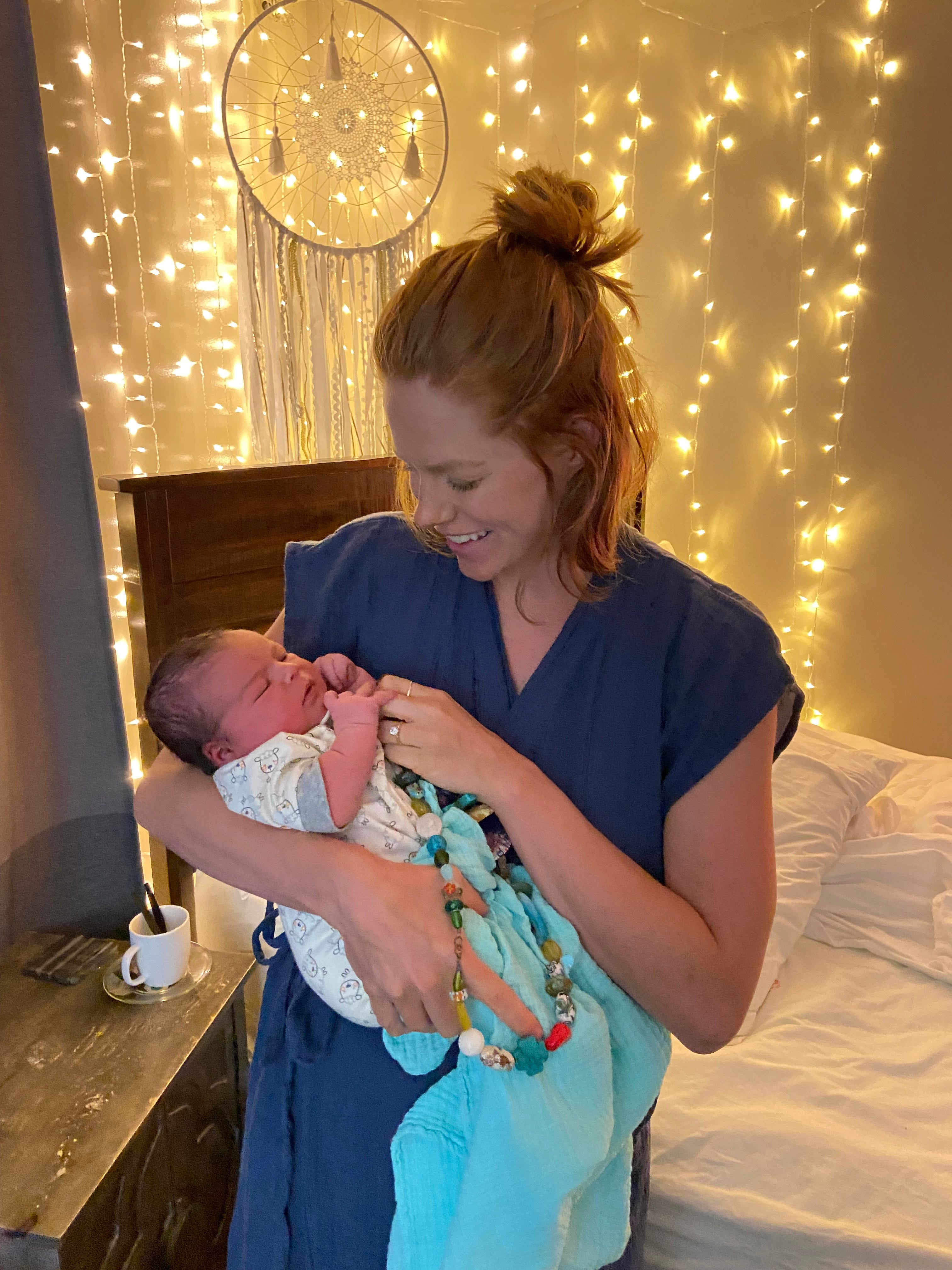
And here’s what nobody tells you about a doula. I thought I was hiring her for me. But looking back, I hired her for Greg. We were both rookies, and a doula is the one who coaches the partner, who teaches the very nervous father-to-be how to be useful in the moment instead of standing there like a houseplant. Someone in our corner who’d done this a hundred times, who could teach us both, was one of the smartest calls we made.
Here’s the part I didn’t expect. The scariest thing about any of it was never the pain.
I’m a mover. Yoga, dancing, all of it. Laboring flat on my back with my feet up sounded worse to me than the contractions ever did. Pain I could plan for, breathe through. What I couldn’t plan for was the look on people’s faces.
I don’t remember the exact conversations, but what I do remember is the feeling. Nervous. A little judged, even when no one said an unkind word, maybe especially then. You’re not doing a medicated birth? It won’t even be an option if something goes wrong? The first few times I got defensive, fast, all I’ve-done-the-research-I-didn’t-decide-this-on-a-whim…
Then I stepped back and something shifted. They weren’t coming after me. They were scared, and curious, and working off the only information they’d ever been handed, the same script I’d had until a coworker glowed at me one afternoon. So I stopped defending and started educating and providing resources.
And I got a dose of advice. That it was not my job to convince anyone. Not my mom, not my mother-in-law, not the relative quietly running the math on how far we lived from a hospital (it’s 45 minutes on a good day). This was what we were doing. They could get on board or sit it out, but the vote was closed.
One question kept coming, from everyone, and I took it seriously because some of them, my mother and sister included, had lived it. What if there’s an emergency. So I went and found the numbers, because you know I’m a numbers girl, and the numbers were on my side. In the biggest US study of planned birth-center births, more than fifteen thousand of them, fewer than two percent ended in an emergency transfer. And most transfers that do happen aren’t the dramatic dash you’re picturing. You see them coming, with time to get a plan together and get to where you need to be. Reading that sealed the deal for me.
So I gave myself one job for nine months. Keep my own stress low so the baby’s stayed low. I swam laps, I saw Melanie, my chiropractor in Serenbe, I got a monthly massage, I ate well and stayed strong, and I let the rest be background noise, including, probably, a lot of conversations about me I decided not to picture. I’m sure they happened. I just couldn’t go there. Greedy, maybe. But I had exactly one person to protect, and it wasn’t anyone’s feelings.
Rory came two weeks late
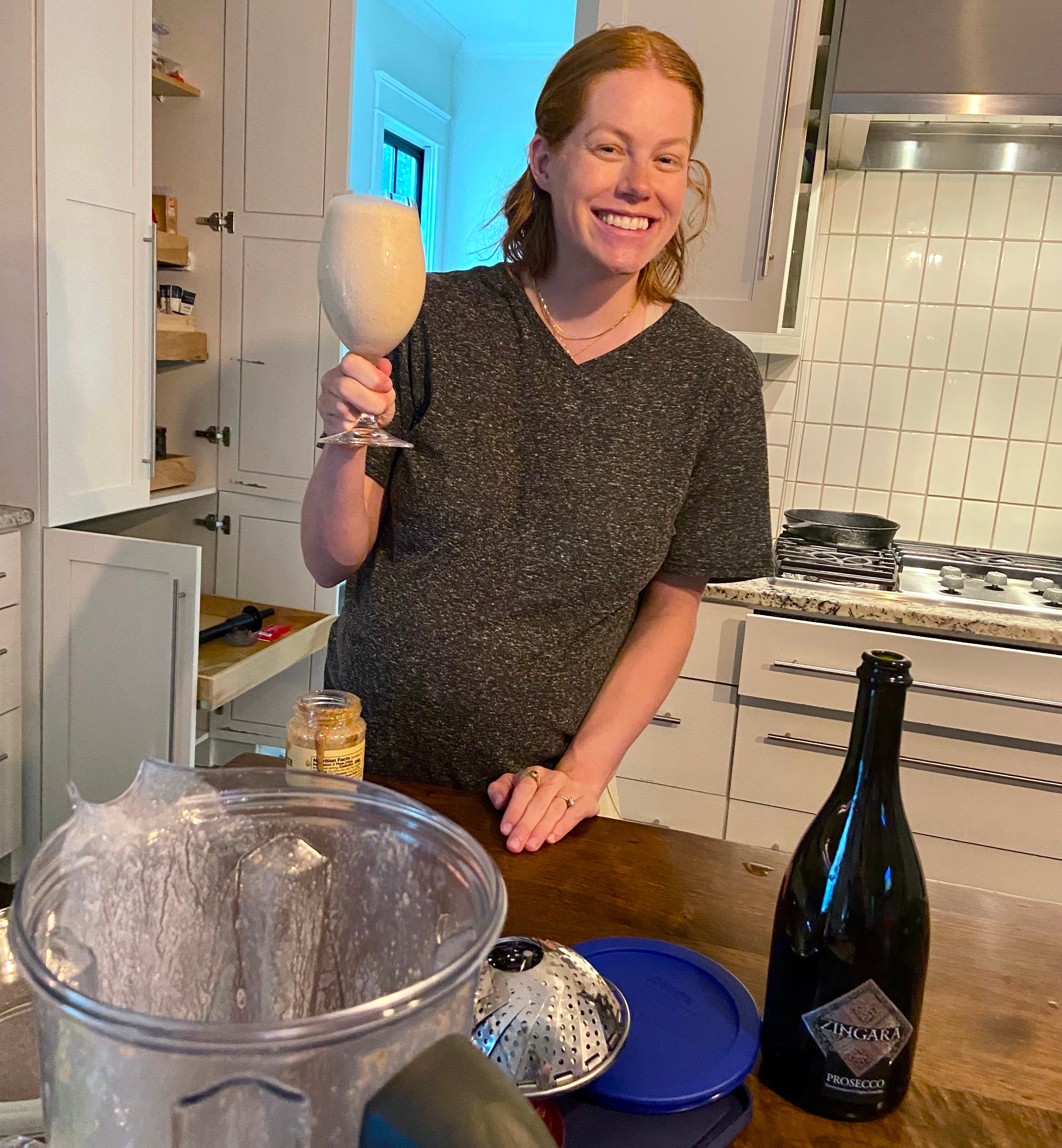
Which is why I kicked off the morning with a smoothie of champagne, peanut butter, mango juice, and castor oil. IYDK: Castor oil is a soft induction the birth center recommends when a baby overstays, not exactly fun, but hey I’ll take it over a balloon or someone breaking my water. Yes, I toasted with my parents and it tasted good. And I still don’t understand why hospitals don’t offer it up???
SO one minute I was hanging pictures in the bathroom, the next I was curled up by the toilet, clearing out my entire digestive tract. I found myself weirdly at home on the toilet, of all places, then moved to the shower and swayed through it all on a yoga ball or in a crouched position (yes I crammed that big ol yoga ball into our shower).
Of course there was a storm. Of course there was traffic, and we live forty-five minutes to an hour out. Greg would say the car ride was the hardest part of the whole birth. I don’t recall, I was extremely focused on staying calm and breathing through each contraction. A task I felt I had been training for my entire yoga career.
After check-in at the birth center, they first had me lay down and plugged me up to a machine to check on baby for, I dno 30 minutes, felt like hours. I would say that was the worst part of the whole birth, before releasing me to the room to move about as I please. Yup, back on the toilet then into the inflatable tub I gave birth to Rory in.
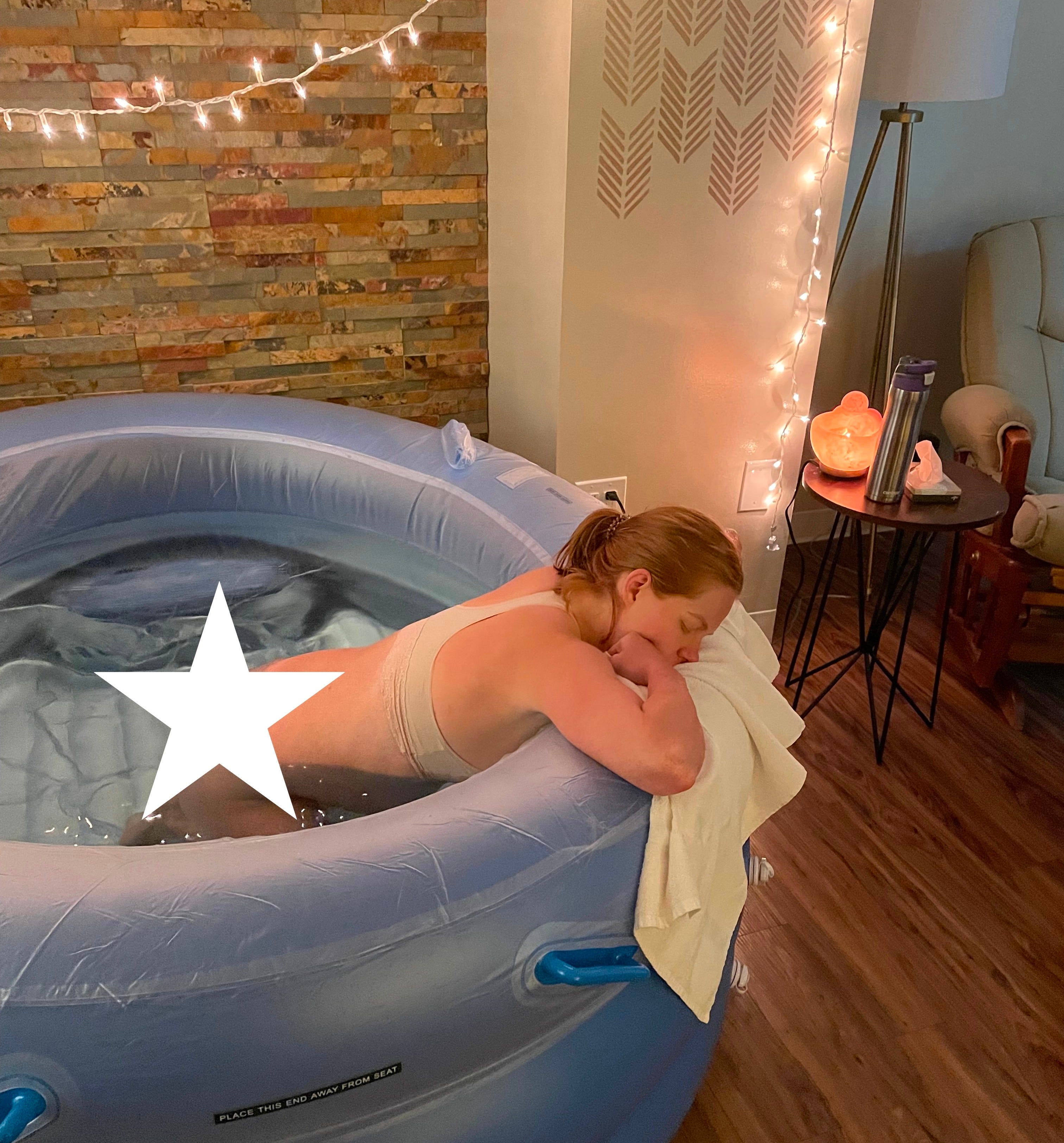
Two parts I found humorous in our time at the Birthcenter:
-
I remember sitting on the toilet looking up at the midwife and asking, “can I go ahead and push now?” I had been waiting for the movie-doctor to give me the ol’ “ok, go ahead and Pushhhh!” and didn’t even realize my body was the one in charge. She giggled and told me go ahead and push if my body wanted to push.
-
Somewhere in the first hour Greg leaned out to the midwife and said, “are we almost done?” (he needed a snack), and she said, “oh honey, we’re just getting started.” He had no idea. Two hours of pushing later, all 9.2 pounds of Rory arrived.
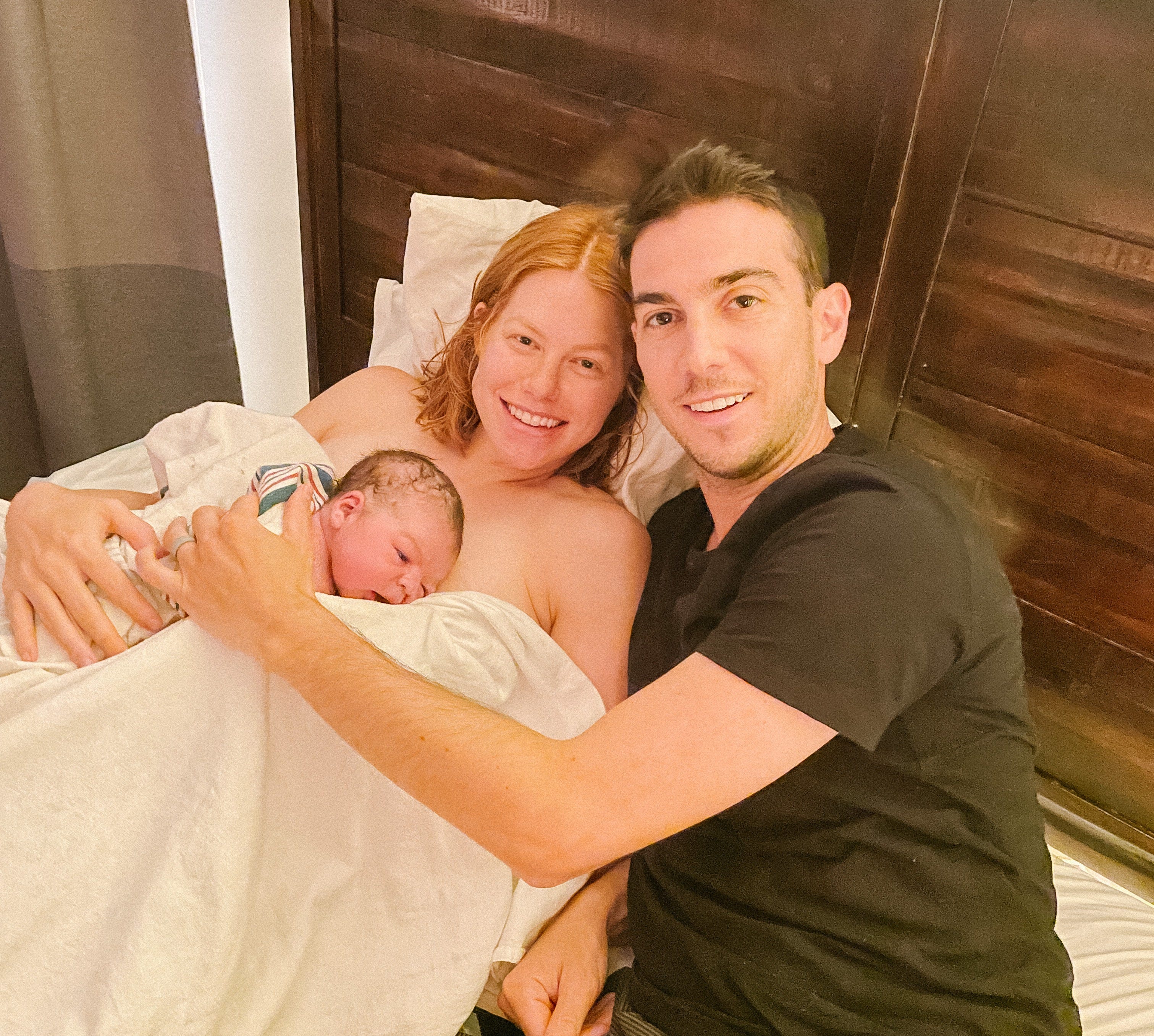
I’m not telling you this to talk you into a birth center, or a home, or a water birth, or anything at all.
That’s the opposite of the point.
I can’t even tell you what a hospital birth is like from the inside. I never had one, or attended one . The women I love most did it the other way, and they wouldn’t change a thing, and neither would I for them. Some women plan the exact birth I had and end up in a surgical suite under bright lights, and that is not a failure. Some choose the hospital and the epidural and the whole calm machine of it on purpose, because that is what makes them feel safe, and safe is the entire game. Some have births that break their hearts, and I think about them every time I tell this, because a beautiful birth is mostly luck.
The thing I’m for was never a particular kind of birth. (A couple of years later I did it again, on my own bedroom floor, but that’s a story for another day.) It’s that I got to choose at all.
And the only reason I knew it was a choice is that a woman at work couldn’t stop glowing about a room with twinkle lights. One conversation, by accident, five years ago. I don’t think she has any idea what she set off.
I keep meaning to thank her.
Thank you, Stephanie.
xx,
Gina
And if someone you love is quietly asking is this it, send this to her. The best doors get found through friends.
New here?
I’m Gina. I spent 15 years in tech marketing, the last stretch helping scale a company from $2.5M to $425M, and in 2025 I left with zero plan to see if I could find a different way to work and mom. Now I write from a weird little wellness town in the woods outside Atlanta.
Some weeks it’s the real numbers of building a business from scratch. Other weeks it’s Human Design and psychics. Always from the middle.
It’s for the ones who did everything right and still caught themselves thinking wait, is this it? If you want a five-step fix, this isn’t it. If you want company, come along.